Share this:
- Share on LinkedIn (Opens in new window) LinkedIn
- Print (Opens in new window) Print
- Share on Reddit (Opens in new window) Reddit
- Share on X (Opens in new window) X
- Share on Facebook (Opens in new window) Facebook
- Share on Pinterest (Opens in new window) Pinterest
- Share on Tumblr (Opens in new window) Tumblr
- Email a link to a friend (Opens in new window) Email
This entry was posted on December 30, 2014 at 1:08 pm and is filed under photo. You can subscribe via RSS 2.0 feed to this post's comments. Both comments and pings are currently closed.
8 Comments on “”
Comments are closed.
 keepthecoffeecoming.blog
December 30, 2014 at 1:09 pm
Hal Borland quote
December 30, 2014 at 3:54 pm
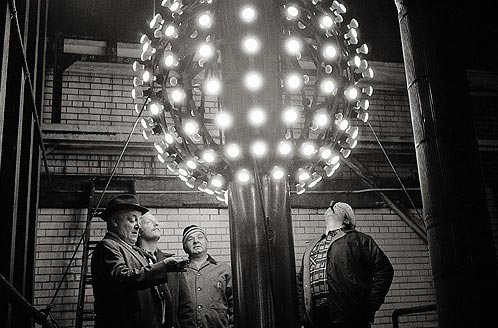
1. It’s not the New Year, and already someone dropped the ball.
2. If the ball does not bounce, it cannot be followed.
Cheers
December 30, 2014 at 8:09 pm
minicapt,
I think if it bounces too slowly or too quickly it again cannot be followed.
December 30, 2014 at 10:55 pm
The ball in Times Square is a time ball. These were used at the Royal Observatory to tell the ships anchored in the Themes river below when it was one o’clock in the afternoon. Each ship had a very accururate chronometer that had to be set to the exact time at the prime meridian which goes through Greenwich where the observatory is located. The astronomers would check the sun’s position for high noon and then lower the ball an hour later. The ship’s navigators would set their chronometers exactly when the ball reached the bottom of the pole. The difference between the local time and the time at the prime meridian is how navigators could calculate their latitude before GPS was invented. Incidentally cabin boys on British ships had the important job of wearing the key to wind the chronometer around their necks.
December 30, 2014 at 11:05 pm
Bob,
Thanks for all that-I didn’t know anything except it is a time bell and made with Waterford glass.
I find that history intriguing.
December 30, 2014 at 11:22 pm
The chronometer was invented by John Harrison in the 18th century. The King offered a prize to the man who could figure out how to determine latitude at sea.
Here’s a URL for a Nova episode about the search for longitude.
http://www.pbs.org/wgbh/nova/longitude/
December 30, 2014 at 11:24 pm
Oops, not latitude but longitude.
Sorry
December 31, 2014 at 12:13 am
Thanks, Bob
I am always amazed at the cleverness of people who see a need then figure put how to meet that need.